Opening Doors of Conversation: Carol Missorelli’s Impact Legacy at Taturana
Carol Misorelli co-founded Taturana in 2014 to use Brazilian cinema as a tool for democratic dialogue and social impact. In response to growing political polarization in Brazil, she helped shape a strategy focused on creating safe spaces for discussion through impact film distribution, festivals, and regional partnerships supported by Movies that Matter. Her work highlights how film can strengthen civil society by opening dialogue rather than fueling confrontation. 12 February, 2026
After 11 years of dedicated work at Taturana — including 4 years of collaboration with Movies that Matter — Carol Misorelli is stepping back from the helm of the Brazilian non-profit. Carol co-founded Taturana in 2014 in Brazil with the goal of acting as an “impact distributor” by combining film distribution and impact campaigning. The spark came when Carol and Co-Founder Livia Almendary realised that there was an incredible selection of films being produced in Brazil but that those films did not seem to circulate among Brazilian civil society. The aim of what eventually grew into Taturana, was to make those films available and to use those films to facilitate discussion and advocacy for social issues. From one side they were “democratizing access to Brazilian cinema”, but on the other side they were also using Brazilian cinema to facilitate access to democracy. At IDFA 2025 Carol was kind enough to offer us a unique insight into the foundation and growth of Taturana, the effect of divisive politics on their fundamental mission, and the various hazards, hurdles and curveballs that you might encounter when setting up shop as an impact distributor.
Initially, Taturana was taking it one project – or one film – at a time, but as more and more lessons were learnt through this process, they eventually realised that a different approach was necessary. The turning point came in 2018 at IDFA. That visit to Amsterdam showed Carol that Taturana was not alone in this fight, that there are many like-minded people and organisations who believe in the transformative power of film and its effective distribution. It also marked the beginning of a valuable relationship between Taturana and Movies that Matter.
However, 2018 was not just a turning point for Taturana that only happened because of the chance to meet other film and human-rights-focused organisations. This change was a response to the political realities in Brazil. When Jair Bolsonaro was elected, and in the period leading up to the election, Carol started to see increased polarisation in public political debate. This was a moment of realisation that revealed that Taturana was making a lot of noise but not changing perceptions”. It was clear that if they wanted to really advance democracy through impactful film distribution, they would have to find a way to change the “social fabric” by creating a safe space around the film. A film can create a safe space for the discussion to take place, breaking taboos and offering an environment where people are open to new perspectives rather than staying in their comfort zone. Carol saw that, in the face of the threat represented by Bolsonaro’s extreme and repressive politics, creating those environments was more important than ever in preserving Brazil’s democracy.
Driven by the polarization of the public political sphere, and inspired by the eye-opening experience at IDFA, Taturana was ready to go full steam into their new approach which was to focus on strengthening the field of film-impact distribution. One of the ways they did this was by coordinating a festival, with the support of the Movies that Matter Grant Programme.
The first festival was in 2019 with the theme of democracy, the focal point of Taturana over the previous years. It was organized in partnership with the Brazilian network Pact for Democracy. That year it counted 2,380 attendees, as well as 49 debates and Q&A’s, and was fully funded by the Movies That Matter Grant Programme. The second festival was in 2021, this time with the focus on racism in democracy, in partnership with APAN. Asking challenging questions about the state of democracy in Brazil such as whether democracy is even possible in a political climate where systemic racism is present. Despite the 2021 edition being primarily online due to the COVID-19 pandemic, it was nonetheless able to grow from the previous edition. It almost doubled both the number of attendees and debates compared to the first edition and was able to secure diverse funding.
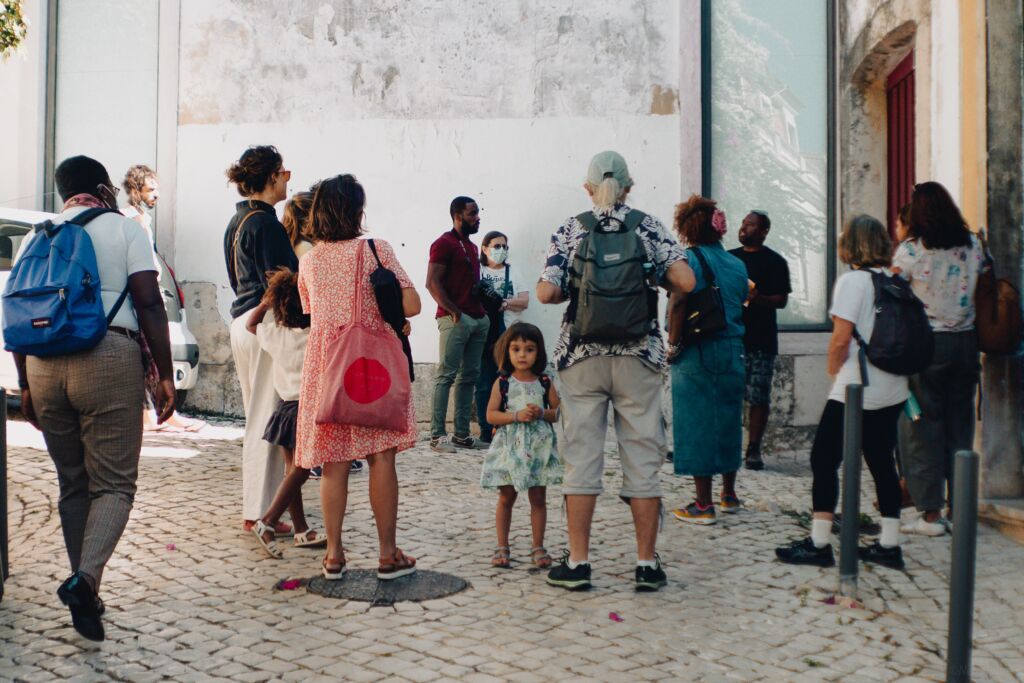
In addition to the newfound focus on festivals and satellite screenings, part of the new approach was to foster a network of like-minded organisations in the region by setting up the Latin American Forum of Cinema and Social Impact. This is a partnership with Ambulante and Impacta Cine in Mexico, and Nodo Sur in Colombia.
Taturana’s story shows the incredible resilience and adaptability of the organisation and the people that keep it running through pandemics and existential threats to Brazilian democracy.
The recent reaction of much of Brazil’s population to the sentencing of Bolsonaro shows how much work still needs to be done to strengthen democracy in Brazil. However, Carol realizes that this requires a particular strategy that does not rely on confrontation. Instead, films are used as a way to create a safe space for expression and exchange. By using particular films that apply to the specific context where a conversation is necessary, Taturana is able to find and open avenues for dialogue. Although Carol is taking a step back from running the organisation, Taturana continues, in the capable hands of Iara Moura, Rodrigo Antonio Silva e Rodrigo Diaz Diaz to use Brazilian cinema to create, locate and “open the doors of conversation”.
Movies that Matter supports human rights festivals around the world. In this series, we highlight the stories of several people involved in our international programmes to discuss their projects and the impact they are making. The International Support team is committed globally by financially supporting human rights film festivals (Grant Programme), film screenings at embassies (Embassy Film Menu), an outreach programme for activists (Activist Programme), coordinating a partnership between festivals (Human Rights Film Network) and workshop programmes for film festival organisers (Cinema without Borders).